
Is Salmon Skin Good for Dogs? From Omega-3s to Safe Serving

Is salmon skin good for dogs? For most healthy dogs, a small piece of plain, fully cooked salmon skin can be an occasional treat. It contains protein and healthy fats, but its higher fat content means you’ll want to be careful about preparation and portion size.
In this article, you’ll learn how dogs can eat salmon skin safely, what nutritional benefits salmon can offer, and why raw or undercooked salmon is best avoided. We’ll also cover how much salmon to serve and why you’ll find salmon in several Wholesomes dog food recipes.
Can Dogs Eat Salmon Skin?
Yes, dogs can eat salmon skin when it’s cooked properly and served without bones, salt, oil, sauces, or seasonings. If you’re sharing salmon from your own meal, set aside your dog’s portion before adding anything extra.
The skin contains many of the same nutrients found in the fish itself, including protein and fatty acids. Dogs also tend to love its rich smell and flavor. However, salmon skin contains more fat than some leaner parts of the fish, so a little goes a long way.
You should remove all fish bones before serving it. Small bones can be difficult to spot and may become a choking hazard or cause problems in your dog’s digestive tract if swallowed.
Raw salmon skin is a different story. Just like raw salmon flesh, it can expose your dog to harmful bacteria and parasites. The FDA advises against feeding raw animal products because they’re more likely to carry disease-causing bacteria such as Salmonella and Listeria.
What Makes Salmon a Nutritious Protein for Dogs?
Salmon can bring more to your dog’s diet than its strong fishy flavor. It provides animal protein along with fats and micronutrients that help support normal body functions.
Of course, feeding salmon by itself won’t provide all the health benefits of a complete diet. The goal is to use it as a small treat or choose a balanced dog food that includes salmon as part of a complete recipe.
High-Quality Protein for Healthy Muscles
Salmon is an excellent source of animal protein, supplying amino acids your dog’s body uses to build and maintain tissues. Protein is especially important for muscle development and maintenance, whether you have a growing dog, an active adult, or a senior dog.
Your dog needs protein every day, but salmon isn’t the only option. Chicken, beef, lamb, and other animal proteins can also fit into a healthy diet. What matters most is that your dog’s regular food supplies appropriate nutrients and calories for their life stage.
Salmon also contains B vitamins and minerals that contribute to normal metabolism and overall health. These nutrients work alongside protein and fat, which is why looking at the whole nutritional profile makes more sense than focusing on one nutrient alone.
If you’re feeding salmon as a treat, you don’t need a large serving to add variety. A few small pieces of cooked salmon can give your dog a different taste without replacing the complete food that should make up most of their diet.
Omega-3 Fatty Acids for Skin, Coat, and Joint Health
One of the biggest nutritional benefits of salmon is its omega-3 fatty acid content. Oily fish are among the best dietary sources of EPA and DHA, two omega-3 fatty acids used throughout the body.
These fatty acids help support your dog’s skin barrier and coat health. If you’re trying to maintain healthy skin and a smooth, shiny coat, omega-3s can be a useful part of a balanced diet rather than something you need to add in large amounts on your own.
Omega-3 fatty acids may also support dogs with joint issues by helping regulate inflammation. Research shows that diets with the right levels of EPA and DHA can support dogs with osteoarthritis and help them move more comfortably.
However, that doesn’t mean feeding extra salmon skin will automatically improve mobility or solve skin problems. If you’re considering fish oil or another concentrated source of fatty acids for a specific health condition, ask your veterinarian how much is appropriate for your dog.
When Salmon Skin Can Be a Problem
Salmon skin can fit into your dog’s diet, but preparation matters. Fat content, raw fish, seasoning, and bones can quickly turn an otherwise nutritious food into something you’d rather keep out of your pet’s bowl.
Before feeding salmon, take a moment to check how it was prepared. If you wouldn’t describe it as plain, fully cooked, and boneless, it’s usually better to choose another treat.
High Fat and Portion Control
Salmon skin is naturally rich in fat. While healthy fats are an important part of your dog’s diet, extra calories can add up quickly when you serve fatty treats on top of regular meals.
For small dogs, even a modest piece of salmon skin can represent a noticeable portion of their daily calories. Large dogs and extra-large dogs can generally handle a larger serving, but that definitely doesn’t mean they should get unlimited salmon skin.
Too much rich food can also cause digestive upset, particularly if your dog isn’t used to it. If your dog has a health condition that requires a lower-fat diet or has had pancreatitis before, use extra caution and talk with your vet before feeding salmon skin.
Think of salmon skin as an occasional treat rather than an everyday addition. You can still give your dog the flavor they enjoy while keeping the portion small enough that it doesn’t throw off the rest of their diet.
Raw or Undercooked Salmon
You shouldn’t feed raw salmon, raw salmon skin, or undercooked salmon to your dog. Cooking reduces the risk from harmful bacteria, while raw fish may also carry parasites that can make dogs sick.
There’s another serious concern called salmon poisoning disease. Dogs can become infected after eating certain raw or undercooked fish that carry a parasite infected with Neorickettsia helminthoeca. In the U.S., the disease is primarily associated with coastal areas of the Pacific Northwest.
Signs can include fever, vomiting, diarrhea, weakness, weight loss, and enlarged lymph nodes. Symptoms commonly begin about a week after exposure, although they can appear later. Left untreated, salmon poisoning can become a serious emergency, so it’s important to seek veterinary care immediately.
If your dog has eaten raw salmon and becomes sick afterward, contact your vet right away and tell them about the exposure. Don’t wait for symptoms to become severe, particularly if the fish came from an area where salmon poisoning disease occurs.
Salt, Seasonings, and Fish Bones
Plain salmon is the safest choice for your furry friend. Smoked salmon often contains too much salt for a dog treat, while salmon cooked with garlic, onion, heavy sauces, butter, or strong seasoning may contain ingredients your dog doesn’t need.
Canned salmon can sometimes work, but read the label first. If you use canned salmon packed in water, choose a boneless, low-sodium or no-salt-added variety whenever possible and drain it before serving.
Always check fresh and cooked salmon carefully for fish bones. Even when a package says boneless, small bones can occasionally remain, so run your fingers through the fish before giving it to your dog.
Make sure to remove anything hard or sharp you find. A small bone may lodge in the mouth or throat, create a choking hazard, or cause injury farther along the digestive tract, so it isn’t worth taking the chance.
How to Safely Serve Salmon and Salmon Skin to Your Dog
If your dog loves fish, sharing a little salmon can be simple. You don’t need a special dog salmon recipe or a long list of ingredients. In fact, the fewer additions you make, the better.
Focus on two things: cook the fish completely and keep the serving modest. Those steps let your dog enjoy salmon without adding many of the risks that come with raw fish or heavily seasoned meals.
Cook Salmon Thoroughly
Bake, grill, steam, or poach fresh salmon until it’s fully cooked. Skip added salt, butter, oils, marinades, and seasonings, and make sure the thickest part of the fish is done before you serve it.
For food safety, fish should reach an internal temperature of 145°F (63°C), or be cooked until the flesh is opaque and separates easily with a fork. Let the salmon cool before offering any to your dog.
If you plan to serve the skin too, cook it along with the fish rather than removing it and serving it raw. Check both the flesh and skin closely for bones once the salmon has cooled.
You can then cut the fish into pieces that suit your dog’s size. Smaller bites are easier to portion, and they also help prevent an excited dog from swallowing a large piece too quickly.
Keep Portions Small and Simple
The easiest way to prepare salmon for your dog is also the safest: plain, boneless, and fully cooked. Once it cools, give your dog a small piece on its own or mix a little into their usual food.
Avoid treating leftover restaurant salmon as an automatic dog treat. Even if the fish itself is prepared properly, sauces, salt, butter, and seasonings may make your dinner a poor choice for your dog.
When feeding salmon for the first time, start with a small amount. Watch your dog afterward for vomiting, diarrhea, or other digestive changes, especially if they don’t normally eat fish or foods with a higher fat content.
If your dog handles it well, you can offer cooked salmon occasionally. You don’t need to serve the skin every time, either. Removing it gives you a leaner option when you want to share the fish without as much extra fat.
How Much Salmon Can Dogs Eat?
How much salmon you can give your dog depends on their body size, calorie needs, regular food, and overall health. There’s no single serving that works for every dog, so portion control matters more than counting pieces.
For small dogs, one or two bite-sized pieces may be plenty. Larger dogs can have somewhat more, but salmon served outside a complete dog food should still be treated as an extra rather than a meal.
A useful general guideline is to keep treats below 10% of your dog’s total daily calories. At least 90% should come from a complete and balanced diet that provides the nutrients your dog needs in the right proportions.
Salmon skin deserves even more restraint because of its fat content. If you’re unsure how much salmon fits into your dog’s diet, your vet can help you estimate an appropriate treat allowance based on weight, activity, and health conditions.
Why Salmon Is Used in Dog Food
Salmon isn’t only something you might cook at home. It’s also a popular ingredient in commercial dog food because it can provide protein, fatty acids, and other nutrients as part of a carefully formulated recipe.
When salmon is included in complete and balanced dog food, you don’t need to calculate portions the same way you would with fresh salmon treats. The ingredients are considered together to meet the nutritional needs listed for the food’s intended life stage.
Salmon as an Animal Protein Source
Salmon meal is commonly used as a concentrated animal protein source in dry dog food. During processing, much of the water is removed from the fish, and some of the oil may also be extracted, leaving a concentrated ingredient that can provide protein within a shelf-stable kibble formula.
That makes salmon useful for more than flavor. When it’s paired with the right amounts of fats, carbohydrates, fiber, vitamins, and minerals, it can contribute to a complete food designed to support your dog’s everyday nutritional needs.
For example, Wholesomes Salmon Meal & Rice Recipe uses salmon meal as its first ingredient. The recipe is formulated for adult dogs and also includes brown rice, flaxseed, vitamins, minerals, and omega-3 and omega-6 fatty acids.
Choosing a salmon-based food can also give you another animal protein option if you’d like to rotate away from foods centered on chicken or beef. As always, consider the entire formula rather than assuming one protein automatically makes a food right for your dog.
Wholesomes Sensitive Skin & Stomach Salmon Recipes
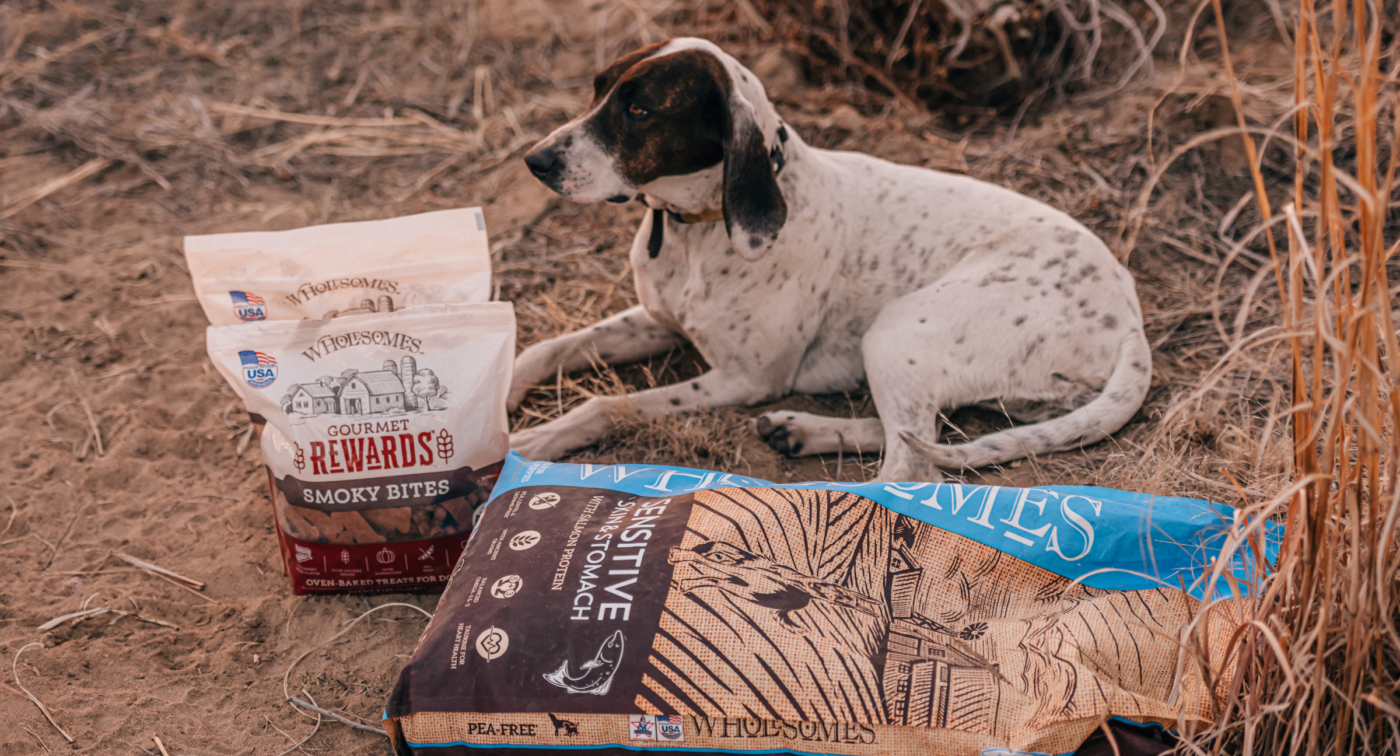
If you’re looking for salmon nutrition in a recipe designed with skin and digestive support in mind, Wholesomes offers size-specific Sensitive Skin & Stomach options. These formulas combine salmon meal with digestible grains, fiber sources, and balanced omega fatty acids.
Wholesomes Sensitive Skin & Stomach Small Breed with Salmon Protein provides 24% minimum crude protein, along with DHA and guaranteed omega-3 and omega-6 fatty acids. It’s formulated for dogs and puppies, excluding the growth of dogs expected to weigh 70 pounds or more as adults.
For bigger dogs, Wholesomes Sensitive Skin & Stomach Large Breed with Salmon Protein is formulated for puppies and adult dogs, including large breeds. Salmon meal is the first ingredient, and the recipe also includes DHA, taurine, and omega fatty acids.
These foods give you a convenient way to include salmon-based nutrition without adding pieces of salmon skin to the bowl every day. You still get a recipe built around salmon protein while knowing the rest of your dog’s nutritional needs have been considered too.
Key Takeaways
- Cook salmon completely. Never serve raw salmon, raw salmon skin, or undercooked salmon. Thorough cooking reduces exposure to harmful bacteria and parasites, including the organisms associated with salmon poisoning disease.
- Keep salmon skin small. Cooked salmon skin is generally safe for healthy dogs, but it’s high in fat. Treat it as an occasional extra and serve a smaller portion than you might serve of the leaner fish.
- Remove every bone. Check salmon carefully before your dog eats it, even if you bought a boneless fillet. Small fish bones can become a choking hazard or injure the digestive tract.
- Skip salty preparations. Smoked salmon and heavily seasoned fish aren’t good choices for your dog. If you use canned salmon, look for plain, boneless salmon packed in water with little or no added salt.
- Count it as a treat. Fresh cooked salmon should fit within your dog’s overall treat allowance rather than replacing a complete meal. Small dogs need much less than large or extra-large dogs.
- Consider salmon-based dog food. If you want to make salmon part of your dog’s regular diet, a complete dog food formulated with salmon protein offers a more balanced option than adding homemade portions every day.
Is Salmon Skin a Good Treat for Your Dog?

So, is salmon skin good for dogs? It can be when you prepare it properly. Fully cooked, boneless, unseasoned salmon skin gives your dog protein and healthy fats, but its rich nature means you should keep the portion small and save it for an occasional treat.
If you want your dog to enjoy the benefits of salmon more regularly, consider a complete food that uses salmon as an animal protein source. Whether you’re sharing a bite of cooked fish or choosing a salmon-based Wholesomes recipe, keeping your dog’s overall diet balanced should always come first.