
Best Dog Food for Itchy Skin: What to Look for and How to Choose

Your dog’s constant scratching can be hard to watch, especially when red skin, paw licking, or a dull coat are also showing up. While food isn’t always the cause of itchy skin, the right diet can provide nutrients that support your dog’s skin barrier, coat, and overall comfort.
In this article, you’ll learn how to choose the best dog food for itchy skin, which ingredients may support healthy skin, and what signs could point to food sensitivities or allergies. We’ll also explain why Wholesomes Sensitive Skin & Stomach is our top nonprescription pick and when you should talk to your vet.
Can Dog Food Help With Itchy Skin?
Dog food can support healthy skin, but it won’t fix every cause of itching. Your dog’s diet matters most when poor nutrition, a food intolerance, or a true food allergy is contributing to the problem.
Itching is a symptom rather than a diagnosis. Common causes include fleas, skin infections, food allergies, and environmental allergies triggered by pollen, mold, or dust. That means switching foods without identifying the cause may leave your dog just as uncomfortable as before.
Seasonal allergies often become worse during certain times of year, while flea allergy dermatitis may cause intense itching around the lower back and tail. Bacterial or yeast skin infections can also cause redness, odor, flaking, hair loss, and constant licking.
You can learn more about the common causes of itching before assuming your dog’s diet is responsible. A veterinarian can check for parasites, infections, and environmental allergens that won’t improve simply because you changed foods.
Still, nutrition plays an important supporting role. A well-formulated diet provides the protein, fats, vitamins, and minerals your dog needs to maintain their skin barrier, immune system, and coat health.
Common Ingredients That Support Healthy Skin and a Shiny Coat
When you compare foods for sensitive skin, look beyond appealing package claims. The ingredient list, guaranteed analysis, nutritional adequacy statement, and your dog’s individual needs will tell you much more.
Two areas deserve particular attention: protein quality and dietary fats. Both provide nutrients your dog’s body uses to maintain healthy skin and a shiny coat.
Quality Protein and Essential Amino Acids
Your dog’s body uses amino acids from dietary protein to build and repair skin, hair, muscles, and other tissues. A dog food made with high-quality protein can provide these building blocks in amounts that support your dog’s daily needs.
Look for clearly named animal proteins, such as salmon, whitefish, lamb, turkey, or beef, rather than judging a formula by protein percentage alone. Digestibility, amino acid balance, calorie content, and overall formulation are also important when choosing the best dog food.
If your dog has suspected allergies, don’t assume every unfamiliar protein is automatically safe. Novel proteins are only “novel” when your dog hasn’t eaten them before, which is why you’ll need an accurate history of their previous foods, treats, supplements, and table scraps.
A limited ingredient dog food may simplify the number of protein sources your dog eats, but the label doesn’t prove that the food is hypoallergenic. Dogs with severe sensitivities may need a prescription formula made with hydrolyzed protein instead.
Omega Fatty Acids and Skin Barrier Support
Omega fatty acids help support the outer skin barrier, which holds in moisture and protects your dog’s body from irritants. A strong skin barrier can help maintain normal hydration and make the coat look smoother and healthier.
Omega-6 fatty acids support normal skin structure and coat growth. You may find them in ingredients such as poultry fat, canola oil, or sunflower oil. They’re an important part of your dog’s diet, although more isn’t always better.
Omega-3 fatty acids help support a normal inflammatory response. Sources may include fish oil, salmon oil, marine ingredients, and flaxseed. Some formulas list specific amounts of omega-3 and omega-6 fatty acids in the guaranteed analysis, which makes products easier to compare.
Don’t choose a food just because fish appears on the package. Check whether the recipe provides a complete balance of protein, fat, vitamins, minerals, and calories for your dog’s life stage. Skin health depends on the full diet, not one headline ingredient.
Signs Your Dog May Need a Different Diet
An occasional scratch doesn’t usually mean your dog needs new food. You should look for a repeated pattern, especially when skin issues appear alongside changes in your dog’s ears, coat, paws, or digestive system.
Signs worth discussing with your veterinarian include constant paw licking, recurring ear infections, red skin, hot spots, thinning fur, hair loss, and frequent skin infections. Your dog may also rub their face against furniture or chew the same irritated areas until they become sore.
Some dogs with food sensitivities also develop vomiting, loose stool, gas, or frequent bowel movements. When skin and digestive symptoms happen together, your vet may be more likely to consider your pet’s diet as one possible factor.
It’s important to pay attention to timing as well. Seasonal allergies may flare when pollen counts rise, while food-related symptoms tend to be less seasonal. However, dogs can have food and environmental allergies at the same time, so the pattern isn’t always easy to read.
Your dog can also develop a food allergy after eating the same food for months or years. Allergies usually involve an immune reaction to a protein, while food intolerance doesn’t involve the immune system and more often causes digestive discomfort.
Before changing foods, write down your dog’s symptoms, when they started, and everything they regularly eat. This information can help your vet decide whether a food change, flea treatment, skin testing, medication, or another step makes the most sense.
Our Top Pick: Wholesomes Sensitive Skin & Stomach
For pet parents looking for a nonprescription dry food, Wholesomes Sensitive Skin & Stomach offers several practical choices. The recipes use named animal proteins, grain-inclusive carbohydrates, fiber sources, and balanced omega fatty acids.
These foods aren’t prescription diets or substitutes for an elimination diet. However, they’re a good everyday option for puppies, adult dogs, and senior dogs that need digestible nutrition designed with sensitive skin and stomachs in mind.
Why It’s a Good Choice for Dogs With Sensitive Skin
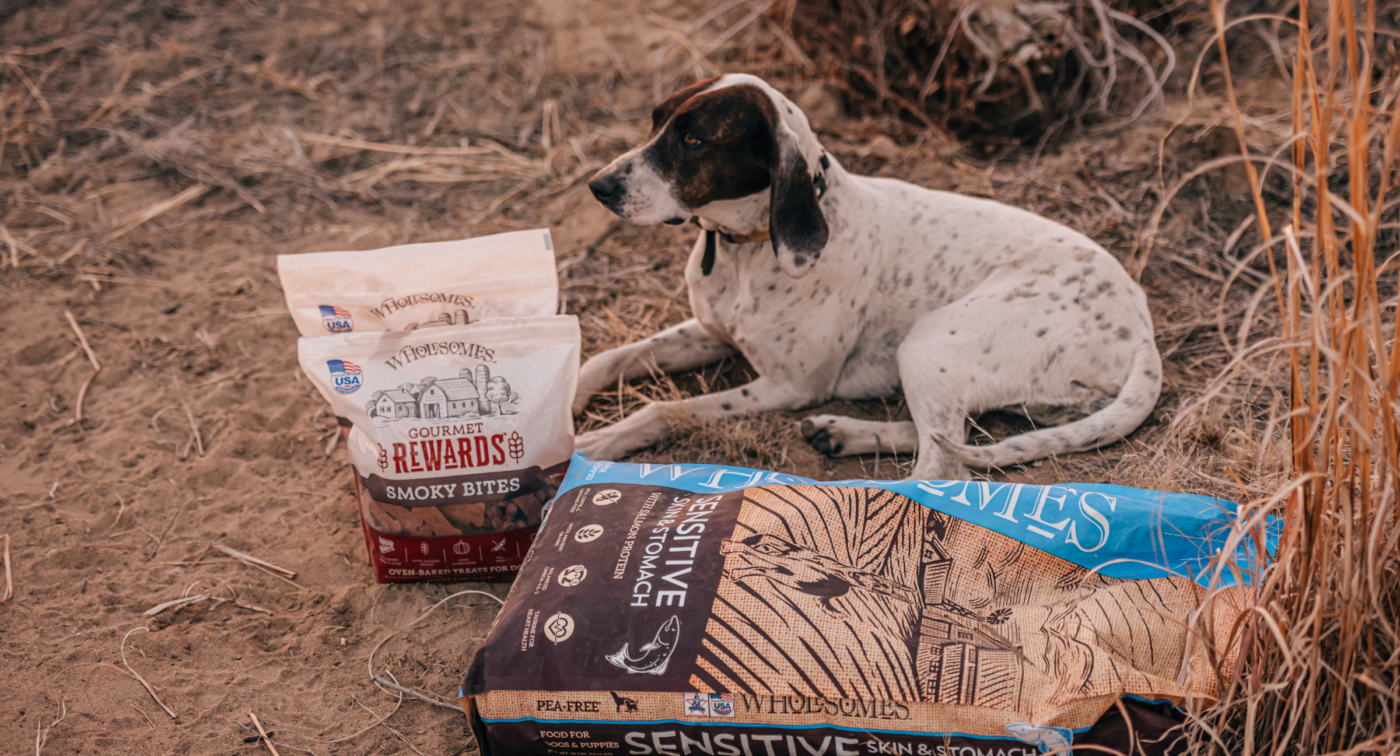
Our main pick is Wholesomes Sensitive Skin & Stomach with Salmon Protein. Salmon meal is the first ingredient, followed by brown rice, oatmeal, pearled barley, whitefish meal, rice ingredients, canola oil, beet pulp, and flaxseed.
The recipe provides a minimum of 23% crude protein and 12% crude fat. Its guaranteed analysis also lists a minimum of 4% omega-6 fatty acids and 1% omega-3 fatty acids, giving you clear information about its skin- and coat-supporting fat profile.
The formula contains quality sources of fiber, including beet pulp and grains, which can help support digestion and stool quality. Fiber acts differently depending on its source, so you shouldn’t assume that every product marketed with natural prebiotic fiber will affect your dog in the same way.
For dogs that prefer another main protein, Wholesomes Sensitive Skin & Stomach with Lamb Protein starts with lamb meal and also contains whitefish meal. The recipe includes brown rice, oatmeal, barley, rice bran, canola oil, beet pulp, and flaxseed.
Size-specific options are available as well. Wholesomes Sensitive Skin & Stomach Small Breed with Salmon Protein has kibble made for smaller mouths, while still providing salmon meal, whitefish meal, grains, fiber, and omega fatty acids.
Our Wholesomes Sensitive Skin & Stomach Large Breed with Salmon Protein recipe is formulated for puppies and adult dogs, including large breeds. It also includes DHA and taurine, and the formula is designed to provide broader nutritional support for large-breed puppies and adult dogs.
Keep in mind that the salmon recipes contain more than one type of fish protein, and the lamb recipe also includes whitefish meal. These products may suit many dogs with sensitive skin, but they aren’t limited to a single animal protein and aren’t intended to diagnose food allergies.
Read the Full Dogster Review
You can also read Dogster’s full product review for a closer look at the recipes, kibble, value, and feeding experience. The review gave the Wholesomes Sensitive Skin & Stomach line an overall rating of 4.8 out of five stars.
Dogster received three formulas for two large dogs and used the large-breed recipe for a full feeding transition. The reviewer reported that both dogs handled the change without digestive problems. The review also highlighted the named meat ingredients, ancient grains, recipe variety, and price compared with several other foods marketed for sensitive dogs.
As with any review, another dog’s results can’t predict how your dog will respond. Use the review as one part of your research, then consider your dog’s age, size, medical history, preferences, and your vet’s advice.
What to Avoid When Choosing Dog Food for Itchy Skin
Finding the best dog food for itchy skin isn’t simply a matter of removing the longest possible list of ingredients. Overly restrictive choices can make feeding harder without addressing the true cause of your dog’s itchy skin.
Instead, avoid unsupported health promises, vague ingredient claims, and sudden diet changes. Focus on complete nutrition, clearly identified ingredients, your dog’s history, and any guidance you’ve received from your vet.
Common Allergens and Unnecessary Additives
Dogs can become allergic to many ingredients, but true food allergies most often involve proteins they’ve eaten before. Commonly reported triggers include beef, dairy, chicken, wheat, and lamb, although any individual dog may react differently.
That doesn’t mean these foods are harmful to most dogs. Avoiding every “common allergen” without evidence may leave you with fewer choices and no improvement. The right ingredient to avoid is the one your dog has been properly shown to react to.
Be cautious with products labeled “hypoallergenic dog food” when they’re sold without veterinary oversight. That phrase can mean different things across products, and an over-the-counter limited ingredient recipe may be produced on equipment that handles other animal proteins.
Cross-contact matters when you’re testing for a true food allergy. A prescription hydrolyzed protein diet is manufactured under tighter controls intended to reduce contamination, while ordinary limited ingredient dog food may contain traces from other recipes made in the same facility.
You should also watch everything your dog eats outside the bowl. Table scraps, flavored medications, supplements, chews, and treats can trigger allergic reactions or interfere with an elimination diet, even when you’ve chosen the right main food.
When Grain-Free Isn’t Automatically Better
Grain-free dog food isn’t automatically better for skin allergies. Dogs are more often allergic to animal proteins than to grains, and a grain-free diet can still contain beef, chicken, dairy, fish, or another ingredient that causes your dog’s symptoms.
A grain-free label also doesn’t tell you whether the food supports healthy skin. The best grain-free option, when one is medically appropriate, still needs suitable protein, essential fats, amino acids, vitamins, minerals, and calories.
Don’t switch to grain-free food just because your dog is scratching. Unless your vet has identified a grain-related problem, rice, oatmeal, barley, and other grains can provide digestible carbohydrates, fiber, and nutrients in a balanced recipe.
The FDA continues to investigate reports of non-hereditary dilated cardiomyopathy associated with certain diets. Reports have involved both grain-free and grain-containing foods, although many reported diets contained peas, lentils, or other pulses high on the ingredient list. The relationship remains complex and unresolved.
Discuss major dietary changes with your veterinarian, especially if your dog belongs to a breed at risk for heart disease. You don’t need to fear every grain-free option, but you also shouldn’t treat “grain-free” as another word for healthier or allergy-friendly.
When It May Be Time to Talk to Your Veterinarian
Contact your veterinarian when itching is persistent, intense, or causing visible damage. You should also seek help when your dog has open sores, swelling, discharge, odor, repeated ear trouble, sudden hives, facial swelling, vomiting, or breathing problems.
Your vet can check for fleas, mites, bacterial infections, yeast, and environmental allergies before focusing on food. Treating a secondary skin infection may provide relief even when an underlying allergy also needs long-term management.
When food allergies are suspected, your veterinarian may recommend a strict elimination diet using novel proteins or hydrolyzed protein. In a hydrolyzed protein diet, proteins are broken into very small pieces that are less likely to be recognized by your dog’s immune system.
A proper elimination diet trial usually lasts at least eight weeks for skin symptoms. During that period, your dog must eat only the approved food, with no unapproved treats, flavored medication, chews, supplements, or table scraps.
If the symptoms improve, your vet may reintroduce previous ingredients to see whether the allergy symptoms return. This challenge step is important because feeling better on a different food alone doesn’t prove that your dog has a true food allergy.
Don’t try to create an elimination diet using random homemade diets. Unless a recipe is formulated by a qualified veterinary nutritionist, it may not provide complete nutrition, especially for puppies, pregnant dogs, large-breed puppies, or dogs with medical conditions.
Your vet may refer you to a veterinary dermatologist when your dog has severe sensitivities, recurring skin infections, chronic ear infections, or symptoms that continue despite treatment. A specialist can help separate food allergies from environmental allergens and other skin conditions.

Key Takeaways
- Find the cause first. Food can support your dog’s skin health, but itching may come from fleas, infections, seasonal allergies, or other environmental allergens. A food change won’t solve every cause.
- Look for useful nutrients. High-quality protein provides amino acids for skin and hair, while balanced omega fatty acids support the skin barrier and healthy coat. Judge the complete recipe rather than focusing on one trendy ingredient.
- Watch for patterns. Repeated paw licking, hot spots, hair loss, irritated skin, digestive trouble, and recurring ear infections may justify a closer look at your dog’s diet. Keep notes so you can give your veterinarian a clear history.
- Choose the right food type. Sensitive-skin food, limited ingredient dog food, and prescription diets serve different purposes. A regular dry food or wet food may support everyday nutrition, while a hydrolyzed protein diet is usually used under veterinary guidance.
- Don’t assume grain-free is best. A grain-free option isn’t automatically hypoallergenic or better for dogs with allergies. Your dog can react to animal proteins or other ingredients whether the recipe contains grains or not.
- Consider Wholesomes. Wholesomes Sensitive Skin & Stomach offers salmon and lamb recipes, along with small- and large-breed options. These grain-inclusive foods may suit many sensitive dogs, but they aren’t prescription elimination diets.
Which Food Will Help Your Dog Feel More Comfortable?
The best dog food for itchy skin is one that meets your dog’s nutritional needs and matches the real cause of their symptoms. Quality protein, essential amino acids, omega fatty acids, and digestible ingredients can support healthy skin, but food alone can’t treat fleas, infections, or environmental allergies.
Start by watching your dog’s symptoms and speaking with your vet when the itching continues. Once you understand what’s driving the irritation, you’ll be in a much better position to choose a food that supports your dog’s skin, coat, digestion, and everyday comfort.